Showing posts with label Framingham reservoirs. Show all posts

9/23/2009

Nature in Framingham.

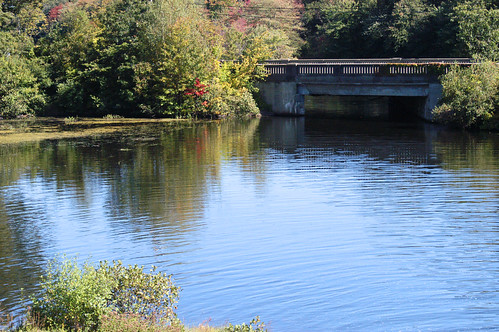
foss towards rt 9
How beautiful is this? Although I love the Cape, I also love coming home to Framingham. This is my "year round" vacation spot, which happens to be between Route 9 and the Mass Pike. The Foss reservoir is lovely, restful, and peaceful, despite the hum of the highways!

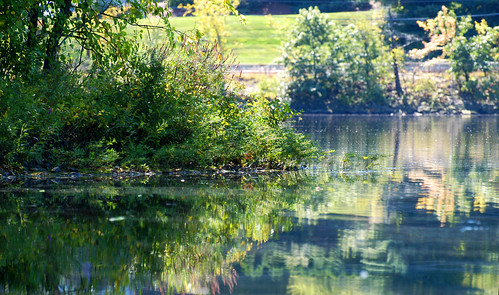
foss in the fall
Yesterday was the last day of summer, but it felt like autumn was still months away. 

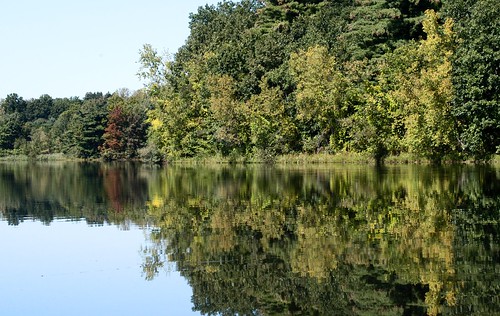
DSC_1979 copy
I love it when the water is mirror smooth.

fossfall copy
The reflections look like an impressionist's version of the trees above; all of the beauty without any hard edges.

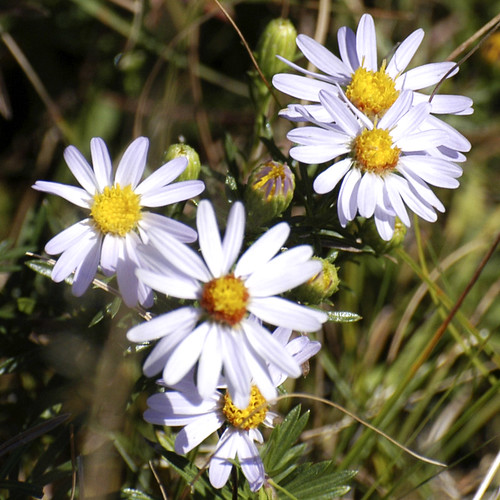
foss flowers copy
Wildflowers have sprung up everywhere since I was here last.

foss poisin ivy copy
Tons of poison ivy, poison oak, poison everything!  Also, bugs like you would not believe!  You need to be covered in bug spray and very careful of touching ANYTHING around here.  (Is this someones surefire method of enforcing the "no trespassing" sign, maybe?)

Route 9
Nature is good for the soul and it doesn't cost a dime. This pastoral scene was photographed from Route 9 during rush hour (5:30 PM on a weeknight). If nature can be found here, you will find it wherever you are, as well.

7/02/2009

Great Blue Herons Growing Up

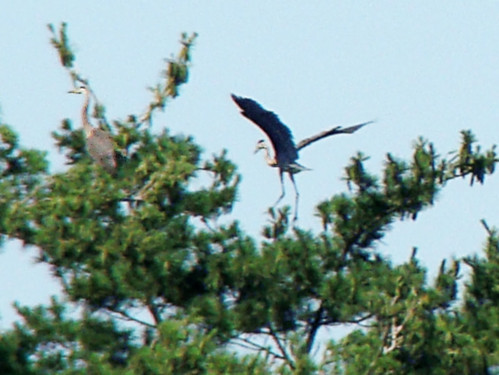
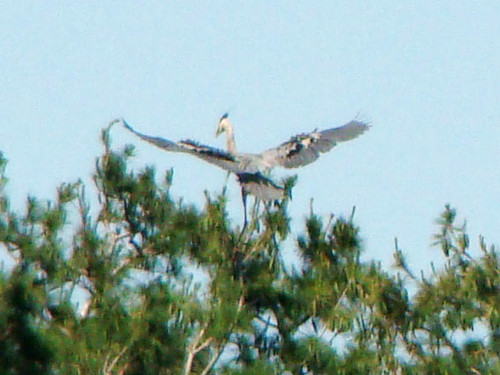
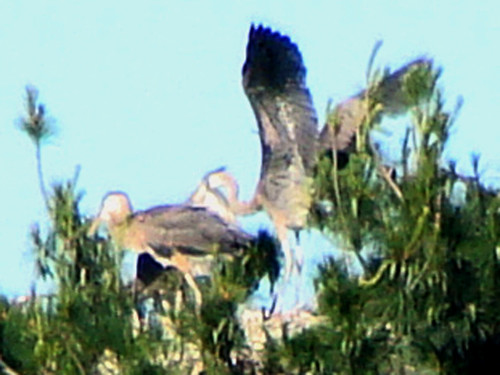
Last weekend, we saw mostly short flights from one part of the island to another. Clearly the youngsters are learning to fly on their own. Check out this little guy dancing on air! I call this picture "I hope you dance."
i hope you dance copy
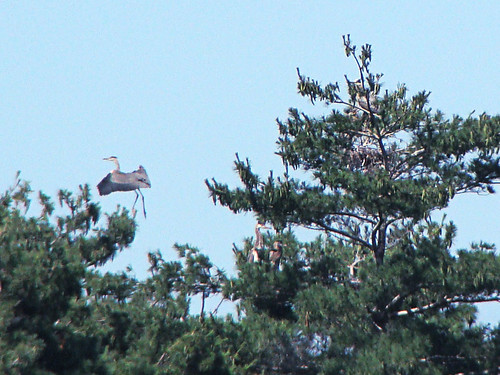
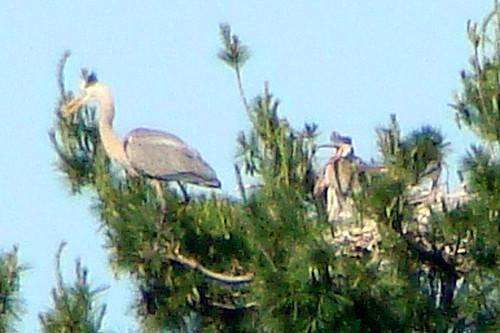
Another exuberant display! Also note the heron families on the branches to the right.
walkingonair
This is a more familiar sight; a parent heading out to find food for a hungry brood.
taking-off

An Impressionistic depiction of a Great Blue Heron! Click on "all sizes" at flickr to see the details. I think Monet would approve!

Monet's heron

6/15/2009

Planting Pines for Preservation (and Profit)

"It was clearly understood back then, and even centuries before, that the purest water is the product of a forested landscape maintained with minimal disturbance. Many hard lessons have been learned throughout European and Asian history of the loss of essential potable water sources due to poor land use practices that have left landscapes denuded, eroded, and impoverished – conditions which doom sustainable water yields."

Brian Keevan - DCR/DWSP Forester


Note: This is part 2 of a series about forests, reservoirs, and 'pine plantations.' Some of the information in this post came from original source documents, but many of the quotes and pictures come from the newsletter Downstream, published by the Massachusetts Department of Conservation and Recreation/ Division of Water Supply Protection. My thanks to Brian Keevan and Jim French, authors of the two excellent Downstream articles quoted in this post, and also to Edward Connors at the DCR Wachusetts Sudbury Ranger Station for answering my all questions so graciously.


QUESTION: Who planted the forests around the reservoirs and along the aqueducts in Framingham, and why where they planted?


ANSWER: We can thank the engineers of the Metropolitan Water Board for planting literally MILLIONS of trees around the reservoirs and aqueducts that provide water for the city of Boston. The brilliant and universally acclaimed Frederick P. Stearns was Chief Engineer of the Metropolitan Water Board when it was formally established in 1895. Stearns and his associates (including consulting engineer Dexter Brackett and engineer William E. Foss, both of whom would eventually hold the post of Chief Engineer) mandated the creation of a forested "buffer system" around the reservoirs to prevent erosion and sediment in the water supply.


The names Stearns, Brackett, and Foss should be very familiar to residents of Framingham. Our three reservoirs were named in honor of these men - and rightly so, as it turns out! Frederic P. Stearns was the genius who first envisioned the Wachusetts and Quabbin Reservoirs; reservoirs that still provide us with high quality water today. He was so highly regarded for his expertise that he went on to consult on the Panama Canal project! Stearns and his associates insisted that forestry was a critical component of any successful water supply system. Their mandate led to forty years of tree planting in Massachusetts. Many of the forests we know and love today began as seedlings planted by crews like the one pictured below.


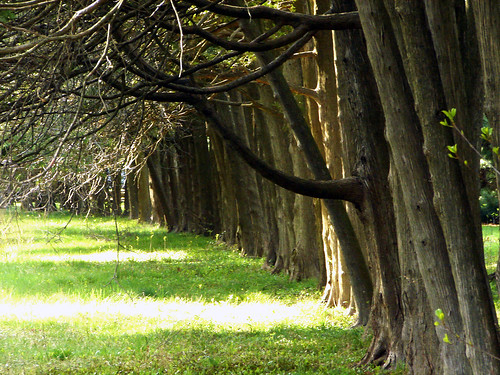
The engineers who built the dams and reservoirs even specified the exact species of trees to plant, and where they should be planted! Twenty years after the Framingham reservoirs were completed, problems with the water were described by consulting engineer Mr. Dexter Brackett as making the water "subject to offensive tastes and odors, and at all times it has more or less color, which renders it somewhat objectionable for table use." One of the many problems with the Framingham reservoirs was thought to be decaying organic matter caused by leaf litter, which resulted in a policy decision to ""remove all deciduous trees which are so near the reservoir that leaves would fall therein, or to provide a screen of arbor vitae or similar evergreens." (Waterworks Handbook, 1916) This explains the previously inexplicable rows of Eastern Red Cedar and Arborvitae trees I saw around the Foss and Sudbury reservoirs! They aren't just "ornamentals" after all!


"About 28 acres of Sudbury Reservoir marginal lands were cleared of small trees and brush and 49,300 three-year-old white pine seedlings, 43,700 three-year-old Scotch pines, 44,050 three-year-old red pines and 43,500 four-year-old white spruces were planted from the nursery. Fifteen hundred three-year-old white pines were set out west of Edgell Street, Nobscot, and 13,100 four year old seedlings at Framingham Reservoir No 3. Along the Weston Aqueduct 6,950 four year old seedlings, and along the Sudbury and Cochituate aqueducts 11,500 seedlings have been planted during the year." (Massachusetts Metropolitan Water and Sewerage Board Annual Report 1917 William E. Foss, Chief Engineer)


The Metropolitan Water and Sewerage Board Annual Reports indicate that trees were planted along the Weston, Sudbury, Cochituate, and Hultman aqueducts every year. Preventing erosion and keeping roots away from underground structures are both mentioned in various documents as reasons for the aqueduct trees. If you dig hard enough, though, you'll see that there was also a financial motive behind those "Pine Plantations"!


You won't find it mentioned in the official MWRA History, but get this quote from the first official Massachusetts State Forester: "There has been of late much discussion on the subject of forests and their relation to stream flow, and we could, if we chose, give you a sermon on this subject, but we have elected in this article to present to you the financial side of the question; in other words, the money profit which towns may obtain from lands which are now in their possession lying idle and unused."(1911) Forester F.W. Rane goes on to detail the exact dollar amount each town could expect to reap from planting and judiciously thinning Red and White Pines on municipal lands! "Municipal forests about the drainage basins of our water supplies and reservoirs can be made not only an important factor in conserving the water supply and in improving sanitary conditions, but, if put under a modern system of forestry management, could be made a great economic factor in the production of wood and lumber."


Just as we suspected, right? What isn't funny, however, is the sorry state of those abandoned tree plantations now. Forestry involves a lot more than just planting trees; there is a complicated and very long term process that must be followed to create a healthy and sustainable forest. The stands of pure pine trees along the Hultman and all over the reservoirs lands have not been properly maintained. Because the stands were never thinned, a healthy mix of new trees never got a chance to grow. The trees are overcrowded, top-heavy, and decidedly unhealthy. Instead of a healthy and diverse mix of tree species and vegetation (i.e., a forest!), we have an accident waiting to happen!
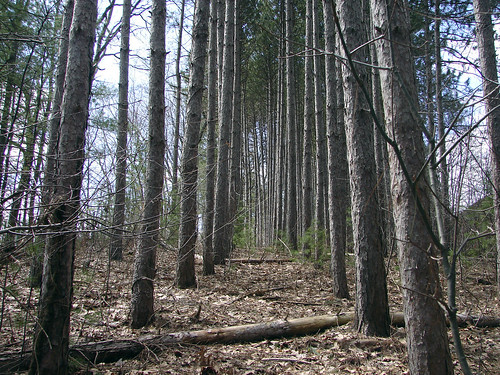


"Single species (monoculture) tree plantations have proven particularly problematic to manage as they age, due to their susceptibility to storm and disease risks. They do not respond well to thinning and do not support diverse wildlife populations. In addition, many of the plantations were “mismatched” to their site. Each tree species has a preferred type of soil and moisture regime. This was not well understood when these trees were being blanketed over the land irrespective of soil conditions. "

Jim French - DCR/DWSP Land Acquisitions Coordinator
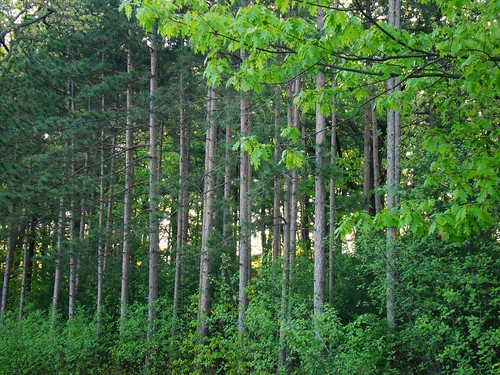


We have no one to blame but ourselves. The last time DCR tried to thin a stand of trees around here, local "tree-huggers" objected so dramatically that the operation was abandoned. If you know anyone who thinks they're being "green" by saving a tree, please set them straight! They are not only showing their ignorance - they are throwing away one hundred years of forestry planning and effort! We could end up bereft of trees once again!
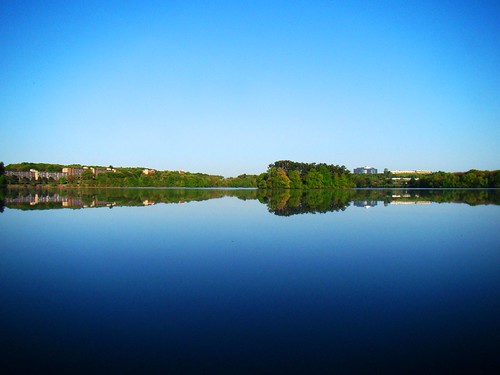


Isn't it beautiful? I think it is!


I'll wrap this up with another quote from Jim French at DCR (I couldn't write a better ending for this story if I spent all night trying!):


"The first century forestry focus was to establish a forest. The second will be to manage that forest to best achieve benefits and amenities that a natural indigenous landscape of trees provides for the reservoir watersheds."

Jim French DCR/DWSP Land Acquisitions Coordinator

6/12/2009

Finding Herons in Trees

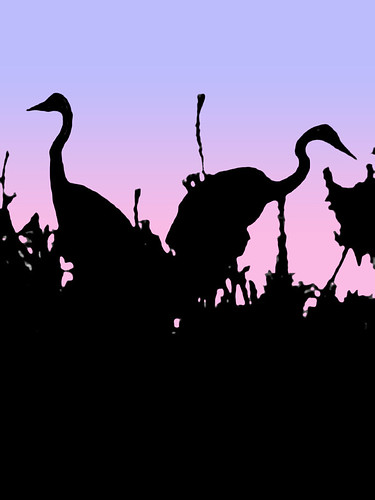
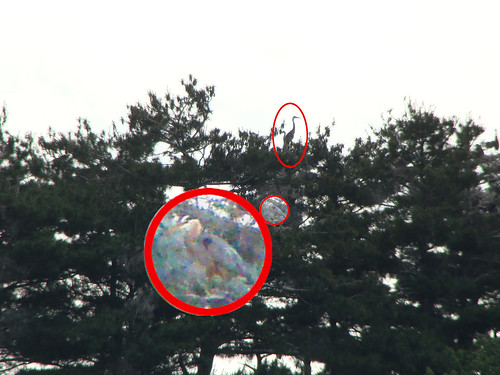
I may be too far away to get good pictures of the herons on the island, but I still think images of Great Blue Herons standing on treetops are pretty amazing.  Why not create ART?  These are silhouettes copied from pictures I took last week.

heron sillouette in trees

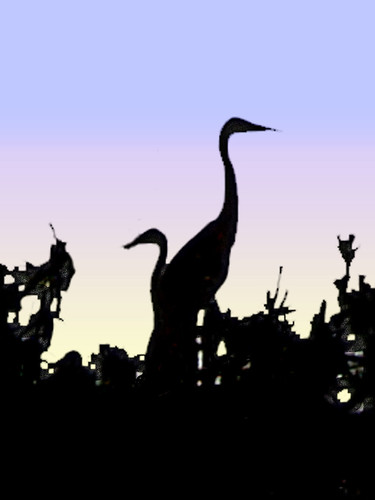
For this one I had to "erase" some of the tree branches to show the smaller heron clearly.
two heron copy

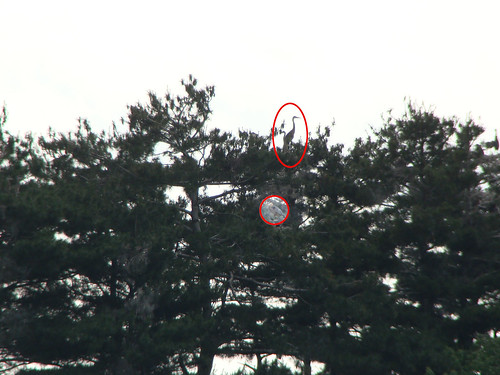
I actually have spent quite a bit of time looking at these blurry images.  I've learned to recognize the birds by shape, and can even find them by adjusting brightness and contrast, adding filters, or viewing different color channels one at a time.  I know there have been close to 100 birds on the island at a time.  I can't prove it, of course.  It is impossible to see them with the naked eye from shore, and you certainly can't tell from the pictures.  Sometimes, though, changing the contrast is all it takes for a bird image to become visible. There is one perfectly identifiable heron in the lower circle below.
found bird copy

If I blow up the image a bit, you can see him clearly!  Cool, right?
found bird enlarged copy

6/10/2009

Mysterious Pine Plantations: Part 1

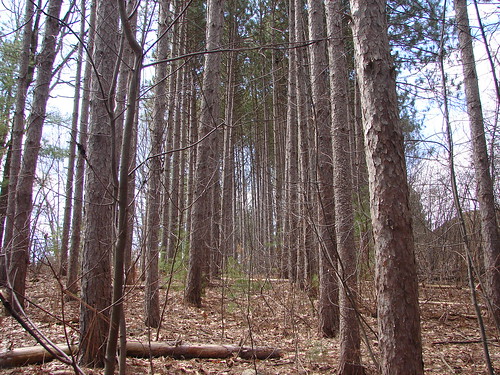
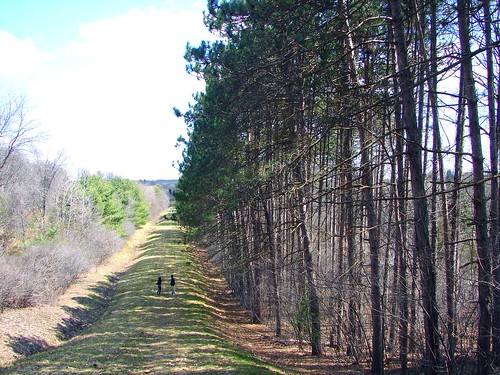
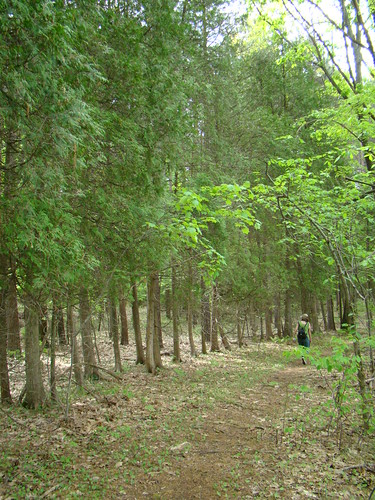
It took some time, but the mystery of the Red Pine "plantation" along the Hultman Aqueduct is no longer very mysterious. As is often the case, the truth about these pines is stranger (and more interesting) than a fictional explanation could ever be. The story behind the odd-looking row of trees running in the middle of town began centuries before the Quabbin and it's aqueduct were even imagined. (Since it is such a long story, this post is part 1 of 2 parts.)

Pine Plantation 4

Inspired by reader comments, I was determined to discover why those trees were planted, and by whom. I found a lot of information, but none of it seemed to fit together for quite a while. Things became really complicated when I realized these were not the only plantation trees in Framingham's forests.

aquaduct down

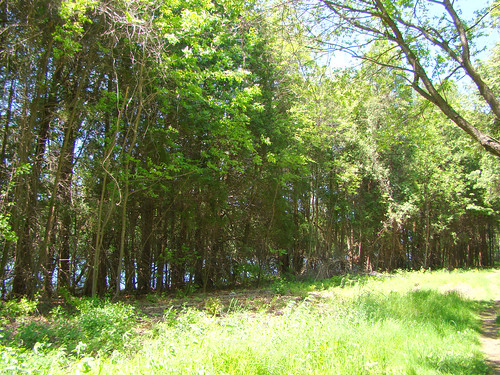
When I explored the shore of reservoir #3 at the bottom of "The Mountain" (where Bose is located), I was startled to see rows and rows of planted Eastern Red Cedar Trees. These trees were very tall, and had to be far older than the Hultman pines. Why would someone plant ornamental cedars in a place where no one would ever see them? Probably because cedars have massive root systems, which prevent soil erosion.

Planted Eastern Red Cedar? Arborvitae Hedge?

But there were also rows of Pines and Arborvitaes on The Mountain. The Arborvitaes were planted alongside what looked like an old path.

arborvitae the mountain

There are White Pines behind the Red Pines planted around the Foss Reservoir.

foss plantation too

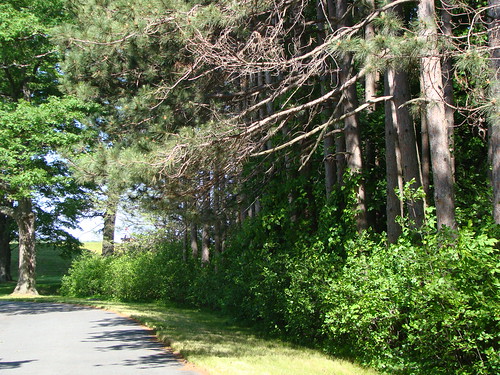
There seems to be at least two distinct age groups among the pines planted around Reservoir #3. The trees along the paved path to the gatehouse appear older than the ones facing the water.

entrance to foss

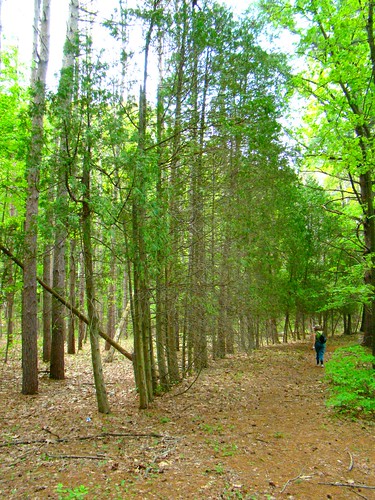
Arborvitae lines both sides of the Bay Circuit Trail at the Sudbury Reservoir.

cedar path left

There are even planted pines around the area I christened "Reservoir Retreat" These trees are larger and older than the ones at the Foss.

reservoir ridge planted pines

Had ALL the forests of Framingham been planted?

All the forests around the reservoirs were definitely planted, as it turns out. The majority of forests in the town of Framingham probably contain planted trees, as do all the forests in eastern Massachusetts. Most of New England was stripped of trees long before they dammed the Sudbury River in the late 1800's.

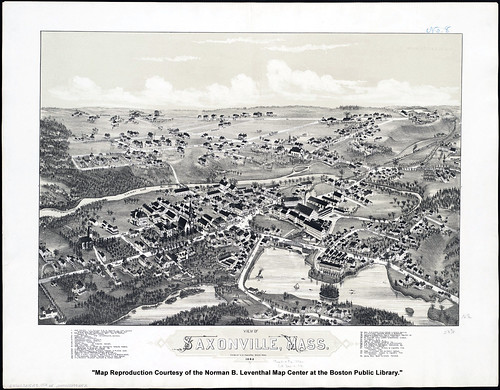
saxonville 1882

There was precious little forest around Saxonville in 1882, for instance. Maybe a bit in the northwest corner of the picture, where steep slopes and lack of till made farming, grazing, and even logging difficult. Otherwise, the hills are virtually treeless for as far as you can see.

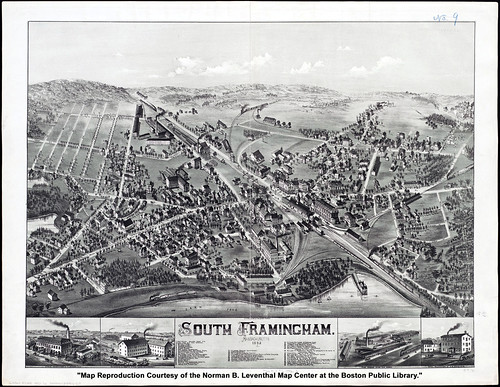
farm pond south framingham

Very little forest in the south of town, either. This is typical of New England in the late 1800's. The Harvard Forest Museum Dioramas (located in Petersham, Massachusetts), are incredible visual depictions of the changing forests through time.


PRE-SETTLEMENT FOREST - 1700 AD
"In the pre-settlement forest, natural variation across sites and ongoing natural and human disturbance processes led to differences in age, density, size, and species of trees across a wide range of sites."


EARLY SETTLER CLEARS A HOMESTEAD - 1740 AD
"For most of the New England region, European settlement occurred largely during the 18th century. Through forest clearing, hunting, and trapping, the abundance of many species changed rapidly and the wilderness was gradually transformed into a domesticated rural landscape."


HEIGHT OF FOREST CLEARING AND AGRICULTURE - 1830 AD
"The peak of deforestation and agricultural activity across most of New England occurred from 1830 to 1880. Across much of New England, 60 to 80 percent of the land was cleared for pasture, tillage, orchards and buildings. Small remaining areas of woodland were subjected to frequent cuttings for lumber and fuel."


FARM ABANDONMENT - 1850 AD
"Beginning in the mid-1800s and continuing for more than a century, farming declined on a broad scale across New England."

It is clear that the reservoirs and aqueducts weren't carved out of the wilderness; the wilderness grew around the reservoirs and aqueducts! Next installment will reveal who did the planting and why they did it.

NOTE: A book with images of the dioramas, New England Forests
Through Time: Insights from the Harvard Forest Dioramas,
includes a detailed explanation of our region's forest history. I own it, and love it. It is availabe at the site or at any bookstore.

6/06/2009

Red Tailed Hawk chased by Crows, etc.

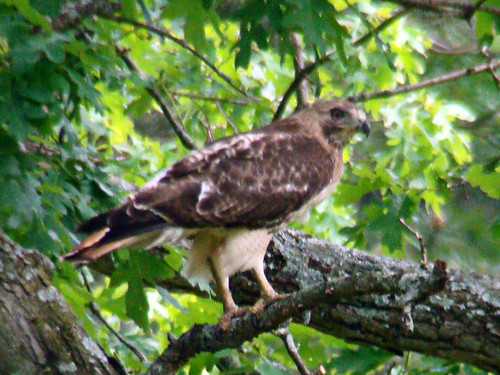
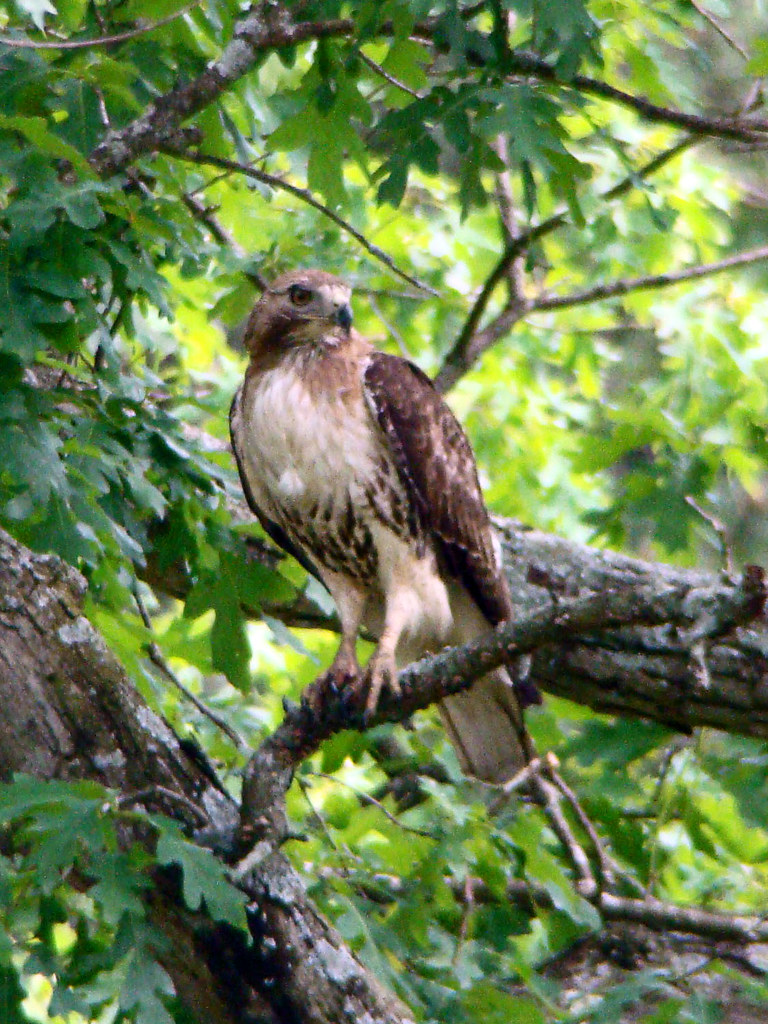
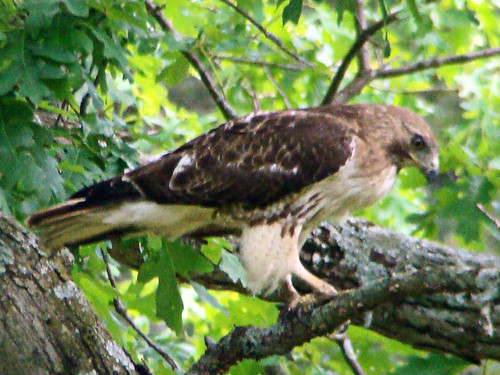
Juvenile Red Tailed Hawk chased into tree by crows and other birds - grackles, maybe. They all came screaming out of the sky like a bird bomb, and then a massive red thing fell out of the sky and into the tree. I didn't have a clue what it was, but I would have sworn the big bird was 2 1/2 feet, at least.

juv red tailed hawk copy

All the pictures were taken without looking - just snapping blindly. I had to turn the camera back on (it has an auto shutoff after three minutes!), and I was looking in the viewfinder at nothing because it defaults to the LCD screen. I'm surprised I even got one shot I could use.

juv red tailed hawk 2 copy

The whole thing was over and she was gone in 30 seconds. I heard the crows screaming again about ten minutes later, and I bet they were chasing her still. They seemed to be enjoying themselves. Believe it or not, I felt badly for the hawk!

juv red tailed hawk 3 copy

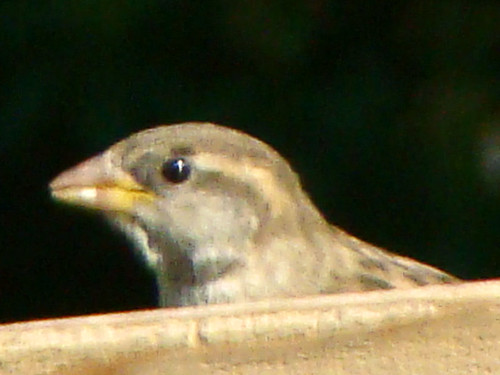
This is an abrupt transition, but the sparrow pic is another accidental image. I was trying to use the remote shutter through the window. It went off before I had framed or focused. It was 9:30 AM on a sunny day, and I still don't know why the background is black.

feeder sparrow copy

6/02/2009

Great Blue Herons, Cormorants, Sandpipers

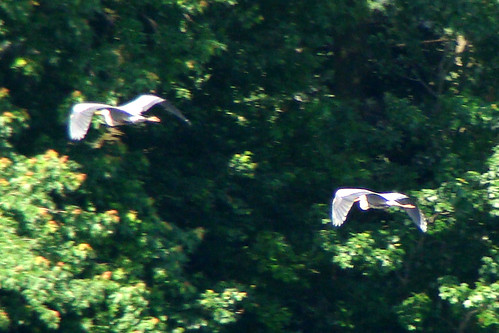
I can't stay away from the Great Blue Heron rookery on Reservoir 3. The rookery is located on the island between route 9 and the mass pike. Unfortunately, there is no place on shore where you can get close enough for a decent photo. It's probably just as well that boating is prohibited, since you wouldn't want to disturb the nesting birds. Nonetheless, I wish I could canoe or kayak out there in the predawn hours, take a million pictures when the sun comes up, and then silently paddle back to shore.


2 great blues flying

Occasionally you will see a Great Blue Heron standing on top of a tree with wings and tail outstretched and crown fully extended. I think this display might be intended to warn off any rivals or predators. At nearly 5 feet tall with a six foot wingspan, they are scary looking up close!


great blue heron on display

The spotted neck on this bird implies that it's a juvenile Great Blue Heron; one that is less than a year old. On the other hand, the coloring is more like that of an adult. If you could see the crest, it would be easier to identify the bird's age.


great blue heron taking off

I can't tell if the bird in the nest is a hungry fledgling or an angry adult!


hungry heron

A few minutes later an adult Great Blue lands with a fish in it's mouth.


Herons learn to fly

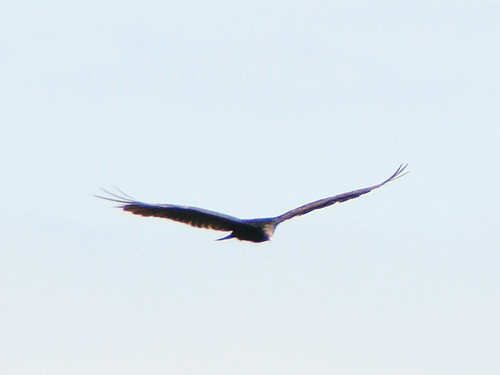
This is a Turkey Vulture. You can tell by it's large size, the small, red, featherless head, and the dihedral (v-shaped) wings when soaring.


foss vulture

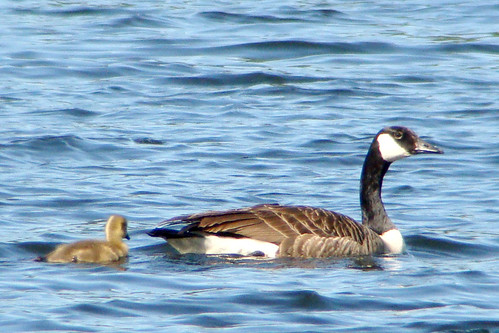
We also saw a pair of Canadian Geese with only one gosling. I was a bit disconcerted by this single child family, because geese usually have large broods. Most people, including many environmentalists, want to see far fewer Canadian Geese around than we have now. They would be happy if every pair of geese had one offspring. Canadian Geese are both a nuisance and a health hazard when large flocks settle in urban or suburban locations. On the Esplanade in Boston, for example, keeping the geese off of the grass is a full time job for a ranger, a dog and a remote controlled boat. Bose has at least one dog whose job is to chase the geese off the Mountain. I haven't seen an overabundance of Canadian Geese on any of the reservoirs, though. Something or someone is effectively keeping the population in check.


foss goose gosling2

The strangest Great Blue Heron behavior I've ever seen is documented in the following three photos. When I first saw the bird in the first photo, I thought he was dead. I thought he probably died from getting tangled in discarded fishing line, which is a very common occurrence among shorebirds. (See Downstream magazine, Fall 2007, Page 2).


hanging great blue heron

I realized he was still alive when I saw him turn his head back and forth, but I still thought he was hanging there.


hangingheron 4

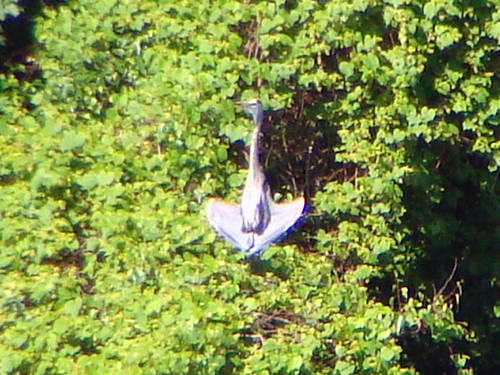
Suddenly he flew away! He wasn't tangled or caught in anything - he chose to take that crazy pose! What is he trying to be, a cormorant?


hanginh heron flies away

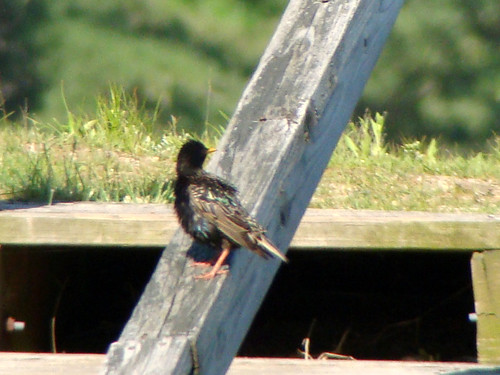
We decided to try and see the other side of the island. On the way back we saw what seemed to be a very wet starling.


wet starling


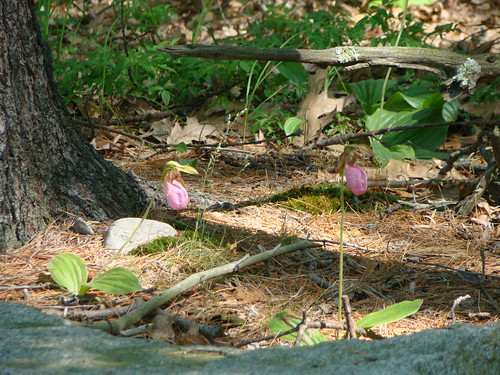
We also saw some flowers that looked like Ladies Slippers. My husband thought these flowers were almost extinct when we were kids. They seem to be recovering nicely around here.


ladies slippers

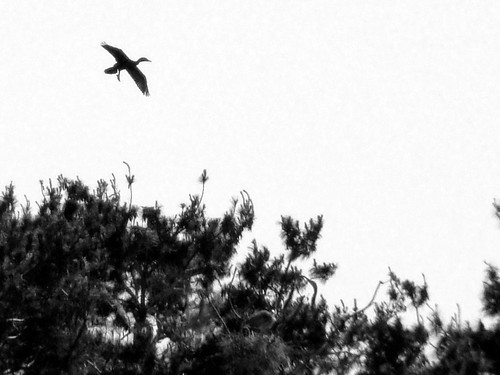
We drove to Chef Orient restaurant, and climbed over the jersey barrier and down to the water's edge. We were still too far away for decent photos, but herons were nesting on this side of the island, too. What surprised us was that at least three of the nests in the back were occupied by Cormorants! Here is a Cormorant taking off while a Great Blue Heron watches from the tree below.


cormorant and heron

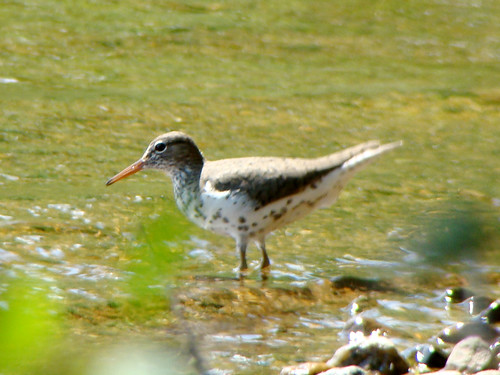
It was on this side of the reservoir that I saw the Spotted Sandpiper. I had never seen one before, so I was thrilled to see this one so close up. Note the spotted underparts and the orange bill with dark tip. Another lifer for me!


foss spotted sandpiper

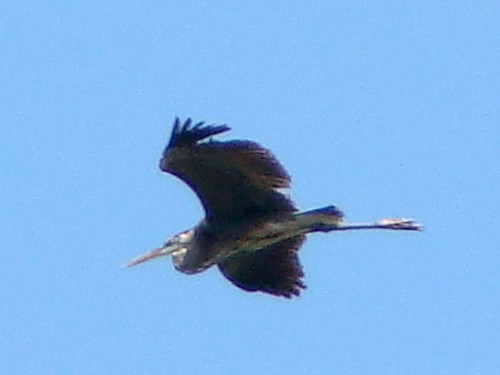
Any day that includes seeing a Great Blue Heron is a great day for me. Seeing dozens of Great Blues AND a Turkey Vulture AND a new Sandpiper all in one day is like reaching nirvana!


great blue heron flies