3/30/2014
First Flowers of Spring
I haven't posted to this blog for a long, long time, but I wanted to keep up the tradition of posting a picture of the first flowers to bloom here in my part of Framingham, Massachusetts. Here they are! March 29, 2014! Yay!
9/17/2013
Goliath Heron! He's a GIANT HERON!
Check out that bill! It's massive! This bird stands nearly a foot taller then the Great Blue Heron, and has a wingspan of 7 feet or more. It's an aptly named, gigantic bird!
I would love to have seen this guy raise his massive crest, but that never happened in front of us. These birds are monogamous, but they have a courtship dance that is a real sight. They don't have a "mating Season" per se, and have been seen raising their young all year long.
That gargantuan bill regularly catches fish weighing more than a pound and well over twelve inches long. It takes a lot of food to satisfy this guy!
This big guy even flies differently than other herons. His legs are so large that they hang down a bit in flight instead of being held straight out behind him. Yeah, this is one gigantic bird. I'm thrilled to add it to my life list!
8/12/2013
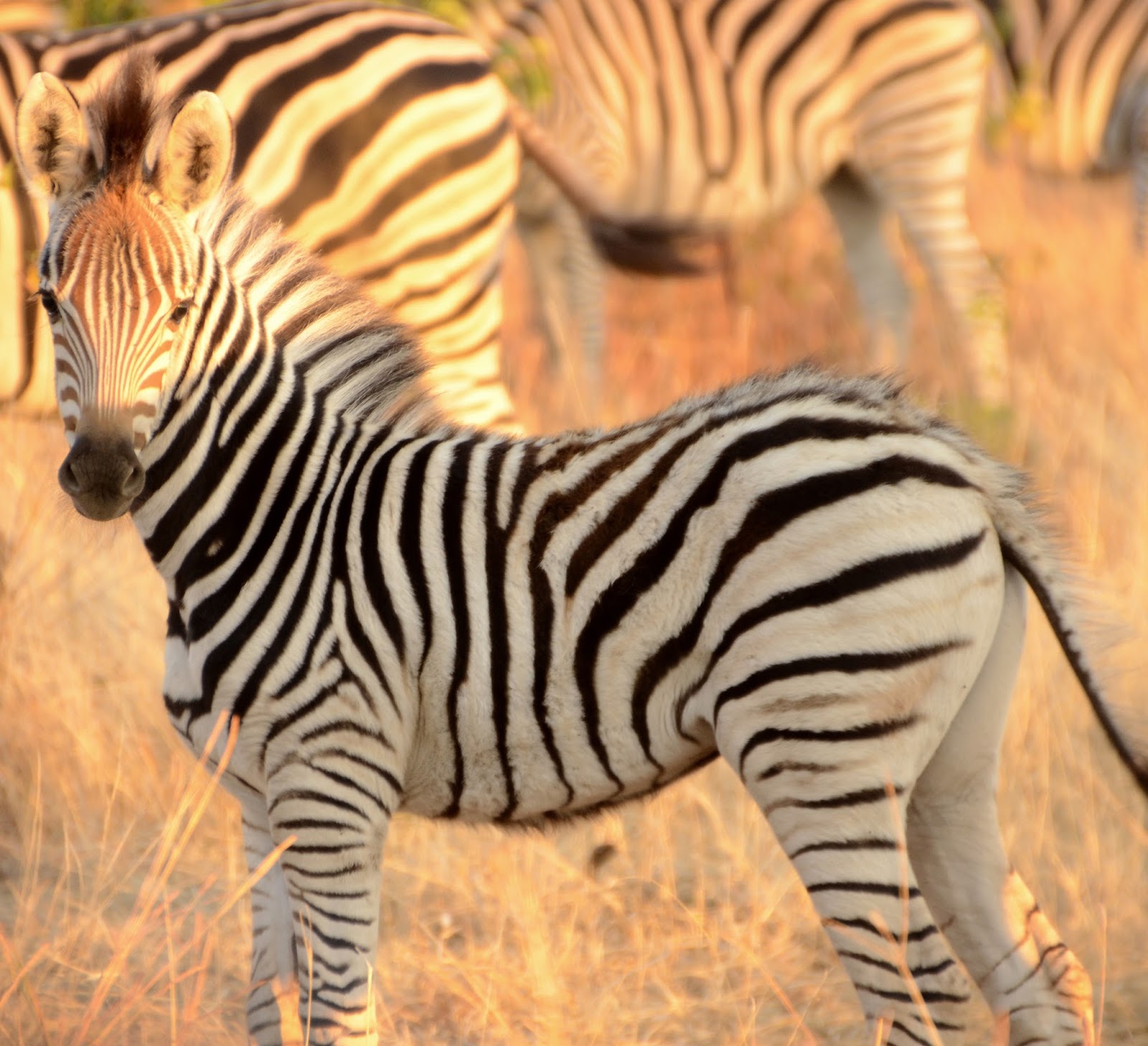
When you hear hooves - think ZEBRAS!
No one could resist getting excited at the sight of a baby zebra! They are so cute and cuddly looking that they look more like stuffed animals than wild animals! (By the way, if you are reading this and saying zee-bra, you are pronouncing it wrong. In Botswana and Zambia, the last letter of the alphabet is pronounced "zed". The word Zebra should rhyme with the word Debra).
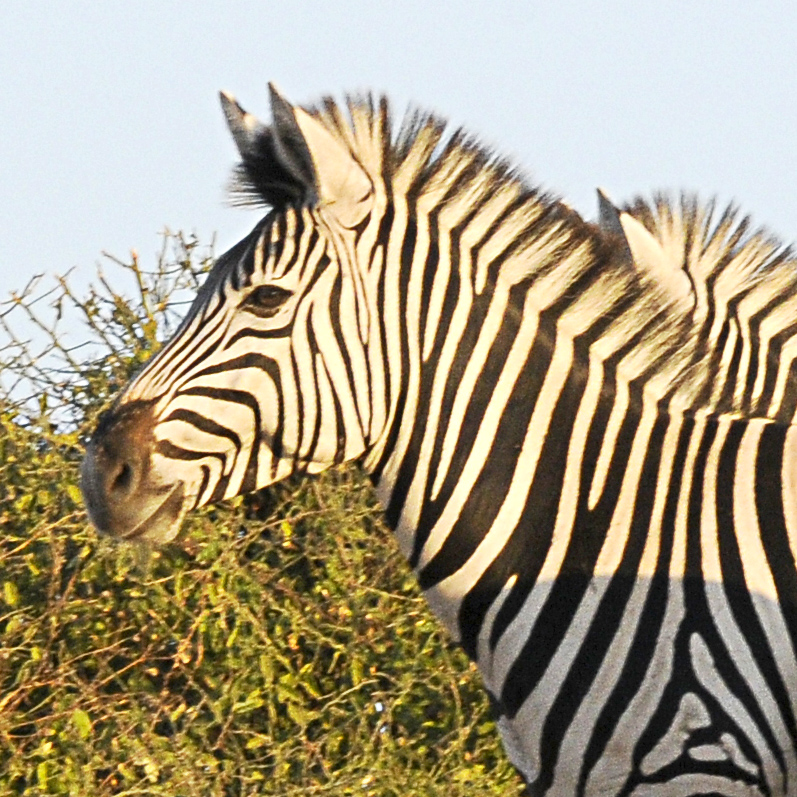
We saw a LOT of zebras in Botswana and Zambia, and eventually they became so familiar that they hardly rated a second glance. These zebras were our first ever, though, and we were all awestruck by their beauty and by their behavior. Just look at these guys - you could spend hours just studying the different patterns of their stripes! These wild Savannah zebras seemed to be as fascinated by us as we were by them.
This particular fellow (and I felt certain it was a male, although I have no real reason for thinking that) had a really LARGE head and neck compared to the rest of the herd. I couldn't take my eyes off of him!
The only thing that I found more fascinating than the big zebra was the baby zebras. There were a few youngsters in the bunch.
Our guide in Botswana, Ra KB, told how to distinguish male zebras from female zebras. Unfortunately, I can't remember if you go by the stripe on the belly or the stripe on the butt, so I don't know if this zebra a girl baby or a boy baby!
I think looking at a zebra is like looking at an M. C. Escher print; each one is a unique work of art, and each one is also an optical illusion!

Here's a very unique zebra! This one was spotted at our hotel at Victoria Falls in Zambia. Since all the Zambia photos will be explored in later posts, I'll finish my zebra post with this fantastic artwork photographed by my daughter, Meghan Wrublewski. Thanks, Meg!
8/09/2013
The Strangest & Most Spectacular Bird Ever? The Southern Ground Hornbill!
![]() |
| Southern Ground Hornbill by Pete Wrublewski |
![]() |
| Southern Ground Hornbill by Pete Wrublewski |
![]() |
| Southern Ground Hornbill by Pete Wrublewski |
![]() |
| Southern Ground Hornbill by Pete Wrublewski |
![]() |
| Southern Ground Hornbill by Pete Wrublewski |
![]() |
| Southern Ground Hornbills by Pete Wrublewski |
Once again, I want to congratulate Pete on his fabulous photography - especially considering he didn't know the camera at all. Also, I would like to thank Ra K.B., our guide in Chobe National Park, for making Pete's dream of seeing a Southern Ground Hornbill come true! Thanks again, Ba Rra KB!
7/16/2013
The Sacred Ibis in Africa
I have wanted to see a Sacred Ibis for some time now, and would have been more than satisfied to see one at a zoo somewhere. Instead, our trip to Africa included seeing Sacred Ibis in the wild, which was a real thrill for me. This bird belongs to an ancient group, with fossil records going back some 60 million years. Records of the Sacred Ibis in human history go back some 5,000 years. Ancient Egyptians venerated it and made it an integral part of their religion. Carvings of the Sacred Ibis are found in many Egyptian monuments and they were also mummified and buried in the temples with the pharaohs.
Sacred Ibis, Chobe National Park, Botswana
In ancient Egyptian mythology, the god Thoth has the body of a man and the head of an Ibis, which gives you some indication of how very sacred the bird was to the early inhabitants of the Nile Valley. Ibises were sacred because they had secret knowledge: They showed up shortly before the annual floods, and they were thought to kill poisonous snakes and even crocodiles. (Note: I can find no evidence that full size cobras and crocodiles were ever at risk of death by Ibis!)
![]() |
| Sacred Ibis, Chobe National Park, Botswana |
![]() |
| Sacred Ibis, Chobe National Park, Botswana |
![]() |
| Sacred Ibis, Chobe National Park, Botswana |
![]() |
| Sacred Ibis, Chobe National Park, Botswana |
![]() |
| Sacred Ibis, Chobe National Park, Botswana |
![]() |
| Sacred Ibis, Chobe National Park, Botswana |
7/12/2013
Like Rikki-Tikki-Tavi? You'll Love These African Mongooses!
I read Rudyard Kipling's The Jungle Book at least 30 times as a kid. This was before the Disney version (gasp!), but I preferred the original stories anyway. Rikki-Tikki-Tavi, the valiant mongoose who killed massive snakes to protect his adopted human family, was always one of my favorite stories. No matter how often I read the story and despite knowing the ending by heart, I was always terrified of the evil cobras, Nag and Nagaina. They seemed invincible in their awful intelligence and their deadly venom. Come to think of it, that story may have been the origin of my snake phobia - even though the brave little mongoose never failed to kill every snake in the garden.
Rikki-Tikki-Tavi was an Indian mongoose, but there are many species of mongoose, and we were lucky enough to see a family group of Banded Mongoose on the banks of the mighty Zambezi River in Zambia. We were also lucky to have my husband Tom on board taking photos. Tom did an outstanding job at capturing these excellent mongoose images, don't you think?
The Banded Mongoose usually eat rodents, birds, reptiles, frogs, and insects such as beetles and worms. They also love to eat eggs. All species of Mongoose will fight and kill small snakes, and they all engage in vicious battles with very large snakes if necessary. These small, cuddly-looking mammals often kill the much larger and very venomous snakes when such a battle ensues. They are lightening fast and amazingly smart little carnivores. They know how to evade a striking cobra and avoid a spitting one. They attack without ceasing even as they perform their evasive maneuvers, and eventually they'll chomp down on the snakes head and crush the reptile's skull. They're awesome!
Baby Mongooses! Can you see them? The one on the far right is pretty blurry, but there's another one right in the middle of the adults. How could you not want a little mongoose for a pet? They are so adorable! On the other hand, they are far from domesticated, and it would be pretty risky to approach a band of Banded Mongoose when there are baby mongooses to protect. Remember what I said about the snakes? Well, I doubt you'd have much of a chance against a bunch of these fearless predators if a Mozambique Spitting Cobra can't beat a single mongoose in a (relatively) fair fight!
Here's another look at the little baby mongoose. Even the adults look like stuffed animals. These Mongooses are very close to the bee-eater nests that are located in the holes in the riverbank just above them. Considering the bloody faces of this bunch, however, I tend to doubt they're feeding on eggs at the moment. I hope its frogs or lizards and not the beautiful bee-eaters that are being eaten!
You know, Rikki-Tikki-Tavi was an ideal pet. He liked to snuggle and he would ride on the boy's shoulder when he needed to check for snakes in the yard. On the other hand, mongooses are temperamental and capable of doing serious damage with a playful bite or two. They are not legal to own as pets in the US, either.
If I ever live in Africa, though, it seems like a mongoose would be an ideal companion. I don't think carrying one around on my shoulder sounds terribly smart, but what better protection could you get from Puff Adders and Black Mambas than having a mongoose at your side? It's worth thinking about, anyway. Or maybe not. This guy looks more dangerous than delightful!
Rikki-Tikki-Tavi was an Indian mongoose, but there are many species of mongoose, and we were lucky enough to see a family group of Banded Mongoose on the banks of the mighty Zambezi River in Zambia. We were also lucky to have my husband Tom on board taking photos. Tom did an outstanding job at capturing these excellent mongoose images, don't you think?
The Banded Mongoose usually eat rodents, birds, reptiles, frogs, and insects such as beetles and worms. They also love to eat eggs. All species of Mongoose will fight and kill small snakes, and they all engage in vicious battles with very large snakes if necessary. These small, cuddly-looking mammals often kill the much larger and very venomous snakes when such a battle ensues. They are lightening fast and amazingly smart little carnivores. They know how to evade a striking cobra and avoid a spitting one. They attack without ceasing even as they perform their evasive maneuvers, and eventually they'll chomp down on the snakes head and crush the reptile's skull. They're awesome!
Baby Mongooses! Can you see them? The one on the far right is pretty blurry, but there's another one right in the middle of the adults. How could you not want a little mongoose for a pet? They are so adorable! On the other hand, they are far from domesticated, and it would be pretty risky to approach a band of Banded Mongoose when there are baby mongooses to protect. Remember what I said about the snakes? Well, I doubt you'd have much of a chance against a bunch of these fearless predators if a Mozambique Spitting Cobra can't beat a single mongoose in a (relatively) fair fight!
Here's another look at the little baby mongoose. Even the adults look like stuffed animals. These Mongooses are very close to the bee-eater nests that are located in the holes in the riverbank just above them. Considering the bloody faces of this bunch, however, I tend to doubt they're feeding on eggs at the moment. I hope its frogs or lizards and not the beautiful bee-eaters that are being eaten!
You know, Rikki-Tikki-Tavi was an ideal pet. He liked to snuggle and he would ride on the boy's shoulder when he needed to check for snakes in the yard. On the other hand, mongooses are temperamental and capable of doing serious damage with a playful bite or two. They are not legal to own as pets in the US, either.
If I ever live in Africa, though, it seems like a mongoose would be an ideal companion. I don't think carrying one around on my shoulder sounds terribly smart, but what better protection could you get from Puff Adders and Black Mambas than having a mongoose at your side? It's worth thinking about, anyway. Or maybe not. This guy looks more dangerous than delightful!
6/27/2013
Killer Crocodiles!
This one looked like it was coming for us, boat and all! These crocodiles are massive! They average 16 feet from tip to tail, and can weigh 500 lbs! A puny person has virtually no chance of surviving - certainly no chance of surviving intact!
The Nile Crocodile's conical teeth are designed to penetrate the flesh of it's prey, and it is almost impossible to loosen it's grip. It will grab on to larger prey (including lions, buffalo, and even small hippos!) and spin them underwater until the prey drowns.
Their scaly skin is impenetrable without lethal weapons, and I can't imagine how one could shoot a croc that has a human in it's jaws without shooting the human, too!
I like this photo because the croc appears to be smiling slyly. It also illustrates the camouflage of these reptiles, which makes them even more dangerous!
The rivers we traveled were teeming with crocodiles. One guide told us that there was a crocodile every 50 feet along the river, if not more. You don't see that many because they don't want to be seen. Nile crocodiles hunt by ambush, and they lie motionless and invisible until their hapless prey wanders within range. Personally, I saw enough crocodiles to last me a while; I don't need to imagine hundreds more lying in wait for me!
6/20/2013
The Best Birds of Africa!
![]() |
| Kori Bustard |
We can thank Pete for finding the oh-so-exotic Kori Bustard shown above, and we can thank Tom for capturing such a magnificent photo of it! The Kori Bustard is the largest bird in Africa that has the capacity to fly, but they spent most of their time on the ground. They are HUGE birds. The males can be 41/2 to 5 feet tall with a wingspan up to 9 feet across! This species can be found in Namibia, Botswana, Zimbabwe, west-central South Africa and South-western Zambia.
![]() |
| Sacred Ibis |
![]() |
| Little Bee-Eater |
![]() |
| Southern Ground Hornbill |
![]() |
| African Open-bill Stork |
That's it for today. Tomorrow I go to an infectious disease doctor to be checked for Malaria and other nasty diseases that might be causing the sudden onset of arthritis-like pain and stiffness that I've been dealing with. I'm not concerned. Most of those illnesses clear up with no intervention required anyway. Wish me luck!
6/07/2013
The Nature of Elephants
Is there anything cuter than a baby elephant? We were surprised and thrilled to see so many herds of African Elephants in Botswana and Zambia during the month of May. May is not generally considered a peak month for tourism in these countries, but we saw every animal you could wish for - and virtually every species we saw had babies in tow!
African elephants are the world's largest land animals, and the baby's are born weighing about 250 pounds. A baby elephant is born into an extended family of adult female elephants, all of whom help to raise and protect the vulnerable youngsters. Male elephants are part of the herd until they are about fourteen years old. At that time the teen-aged male elephant is kicked out of the family group and will either live on it's own or hook up with other young males. Evidently, humans are not the only species who can expect trouble whenever young adult males are around!
For the first months of their lives, baby elephants will walk underneath their mothers whenever the family group travels. We were astounded to see this tiny one crossing the road in Chobe National Park in Botswana. It turned out that the elephants are headed for the river to drink and bathe.
Elephants love the water. They drink it in massive quantities (adults consume thirty to fifty gallons per day!), and they love to cool off in the water and take mud baths as well. Elephants cover themselves with mud to protect their skin from insects and from the often brutal African sun.
I still have a lot to learn about elephants, but I can't believe anyone could possibly resist falling in love with elephant babies and elephant moms!
African elephants are the world's largest land animals, and the baby's are born weighing about 250 pounds. A baby elephant is born into an extended family of adult female elephants, all of whom help to raise and protect the vulnerable youngsters. Male elephants are part of the herd until they are about fourteen years old. At that time the teen-aged male elephant is kicked out of the family group and will either live on it's own or hook up with other young males. Evidently, humans are not the only species who can expect trouble whenever young adult males are around!
For the first months of their lives, baby elephants will walk underneath their mothers whenever the family group travels. We were astounded to see this tiny one crossing the road in Chobe National Park in Botswana. It turned out that the elephants are headed for the river to drink and bathe.
Elephants love the water. They drink it in massive quantities (adults consume thirty to fifty gallons per day!), and they love to cool off in the water and take mud baths as well. Elephants cover themselves with mud to protect their skin from insects and from the often brutal African sun.
I still have a lot to learn about elephants, but I can't believe anyone could possibly resist falling in love with elephant babies and elephant moms!
6/03/2013
The Nature of Africa
This is an African Grey Hornbill; one of the dozens of new bird and animal species I saw in Botswana and Zambia last month. The trip was life-changing and awe-inspiring. I know i'm home from Africa because I am siting at my computer writing a blog post, but in my heart and soul I am in Zambia still. It is not simply because the country is beautiful or because the birds and animals are so thrilling to see - although both are true. It's not just that everyone we met was kind, courteous, and unbelievably happy, despite the desperate poverty and the scourge of AIDS everywhere we were. It's not even that I miss the truly joyful and fulfilled young man that my son Peter has become since he moved to Africa. Not one of those things make it hard for me to settle down to life back in Massachusetts - but all of those experiences combined have kept me in Zambia inside my mind!
This is the first in a series of posts featuring the nature of Southern Africa. It was no problem identifying the African Elephants shown above, but without having Pete around, most of the birds and some of the mammals and insects will be very difficult to ID. On the up side, we'll all learn something new with each blog post!
Every moment of our trip was so exciting and such a shock to the senses that it almost seemed unreal. I was certainly hoping to see Giraffes, for instance, but totally unprepared for whole families of Giraffes and simply irresistible Giraffe babies everywhere! Our excellent guide at Muchenje Lodge in Botswana, KB, knows everything there is to know about every bird, animal, and insect we saw; and every one has a fascinating story to tell. Too bad KB isn't here to help me write up these blog posts for you!
This magnificent and massive beast is a Greater Kudu. The Greater Kudu is a game animal elsewhere in Africa, but in Chobe national Park, where Muchenje Lodge is located, the animals are protected from hunters and are thriving. The Kudu was one of many ungulates we got to see up close and personally!
This is the first in a series of posts featuring the nature of Southern Africa. It was no problem identifying the African Elephants shown above, but without having Pete around, most of the birds and some of the mammals and insects will be very difficult to ID. On the up side, we'll all learn something new with each blog post!
Every moment of our trip was so exciting and such a shock to the senses that it almost seemed unreal. I was certainly hoping to see Giraffes, for instance, but totally unprepared for whole families of Giraffes and simply irresistible Giraffe babies everywhere! Our excellent guide at Muchenje Lodge in Botswana, KB, knows everything there is to know about every bird, animal, and insect we saw; and every one has a fascinating story to tell. Too bad KB isn't here to help me write up these blog posts for you!
This magnificent and massive beast is a Greater Kudu. The Greater Kudu is a game animal elsewhere in Africa, but in Chobe national Park, where Muchenje Lodge is located, the animals are protected from hunters and are thriving. The Kudu was one of many ungulates we got to see up close and personally!
The African Fish Eagle is the national bird of Zambia, and was one of the birds I was very much hoping to see. They look very much like the American Bald Eagle, don't they? Well, we saw a great many African Fish Eagles, and they are much more like the American Eagle than you could imagine. Tom even managed to capture images of the spectacular mating dance of the Fish Eagles, where the pair clasp on to each other and drop from the sky in a terrifying spin that must be seen to be believed. It just happens that I have seen the same deadly-looking drop right here in Framingham, Massachusetts a few years back. In that case, it was an American Bald Eagle practicing his moves in preparation for mating season. I never would have believed I'd see such a fabulous sight again in my lifetime - especially half a world away!
I hope all my Nature of Framingham readers enjoyed these images from the Nature of Africa. The trip changed my life in many ways, and I hope to share the wonder of it all with each of you, too!
Subscribe to:
Posts (Atom)